Save the Children Australia
Save the Children Australia mailed fewer donors, raised more, and proved precision beats volume
Save The Children Australia faced a familiar problem before its Christmas 2021 appeal: the team could build a list, but it couldn’t defend it. When every mail piece costs money, “send more” isn’t a strategy.
Save The Children Australia needed a defensible cut-off before the Christmas 2021 appeal
The team had to answer a Focus question: which donors actually deserved a mail piece, and which ones were likely to create avoidable cost.
With rising costs and a tighter fundraising environment, the goal wasn’t a bigger list. It was a clearer decision.
RFV segmentation made list decisions feel safe, but it wasn’t predictive
Save The Children Australia had relied on RFV (recency, frequency and value) segmentation to build appeal lists. It was familiar, but it did not reliably predict who would respond.
External: thousands of mail pieces were going to donors who were unlikely to give.
Internal: without a better signal, expanding the list felt safer than cutting it.
Philosophical: fundraising should be respectful and focused, not blanket outreach driven by anxiety.
A controlled Christmas appeal test compared prediction-based targeting with RFV
Save The Children Australia ran a measurable experiment to see whether ranked, prediction-based targeting would outperform RFV.
Build two lists: one using existing RFV rules and one using donor-level propensity scores.
Compare overlap and misses: 19,854 donors appeared in both lists. Another 4,813 were selected by RFV only (and predicted as unlikely to give). Another 1,244 were selected by propensity only (likely to give, but missed by RFV).
Mail and measure: by sending to everyone selected by either method, the team could compare response and net return.
The results held because the model changed who got mailed, not just how the list was labelled
Metric | Result |
|---|---|
Response rate improvement | +18% with prediction-based targeting vs. RFV |
Mailing volume reduction | -14.5% |
Cost savings across three appeals | $16,000 saved in the first 6 months |
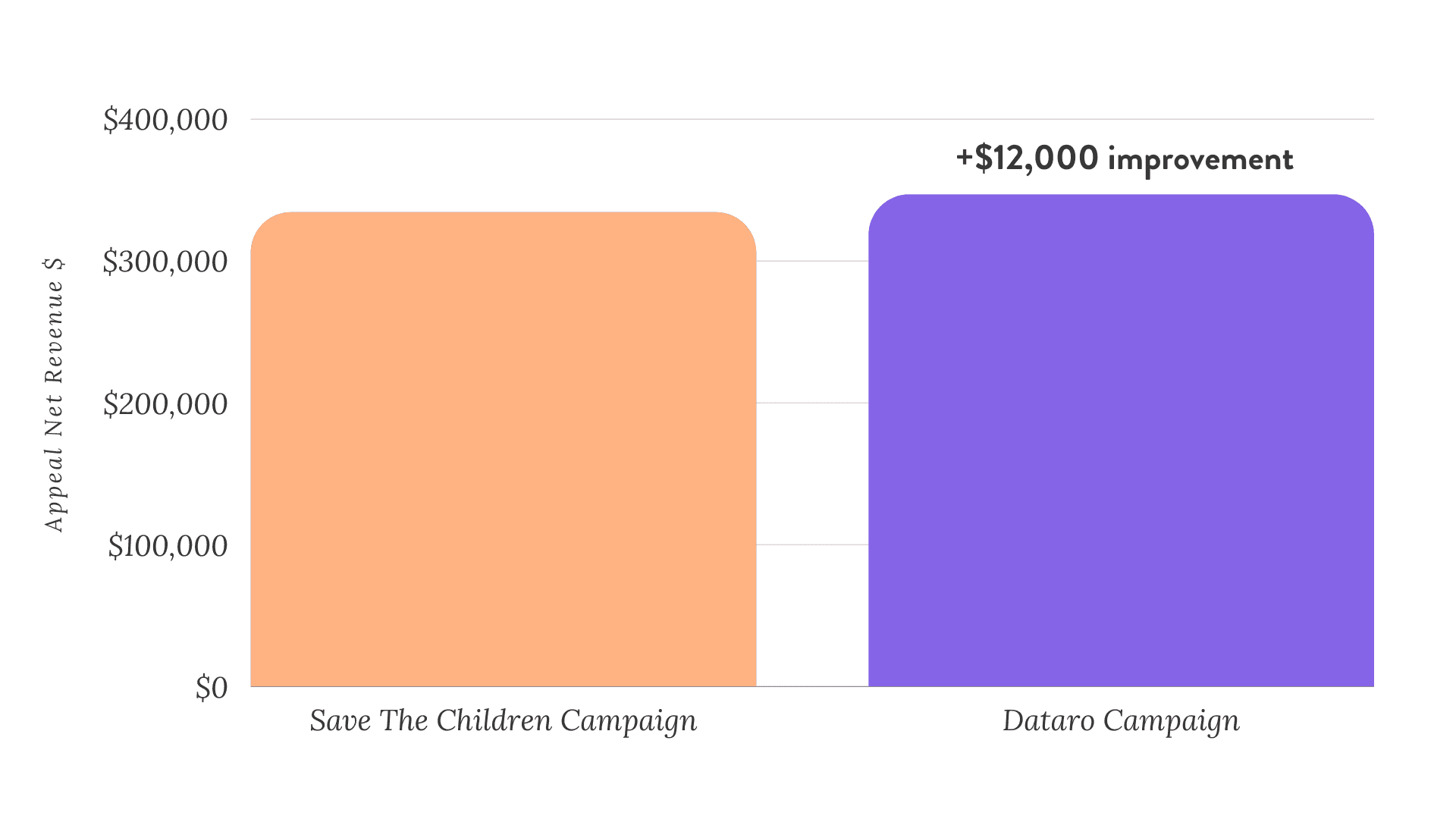
Appeal selections generate better net returns
The test exposed the cost of imprecision in the “RFV only” group
The donors selected by RFV only performed as predicted: a 0.5% response rate.
The donors selected by propensity only delivered incremental gifts from people who would have been excluded under RFV.
Had Save The Children Australia used ranked scores as the sole selection method, the charity could have reduced the mail file by 14.5% without losing gifts.
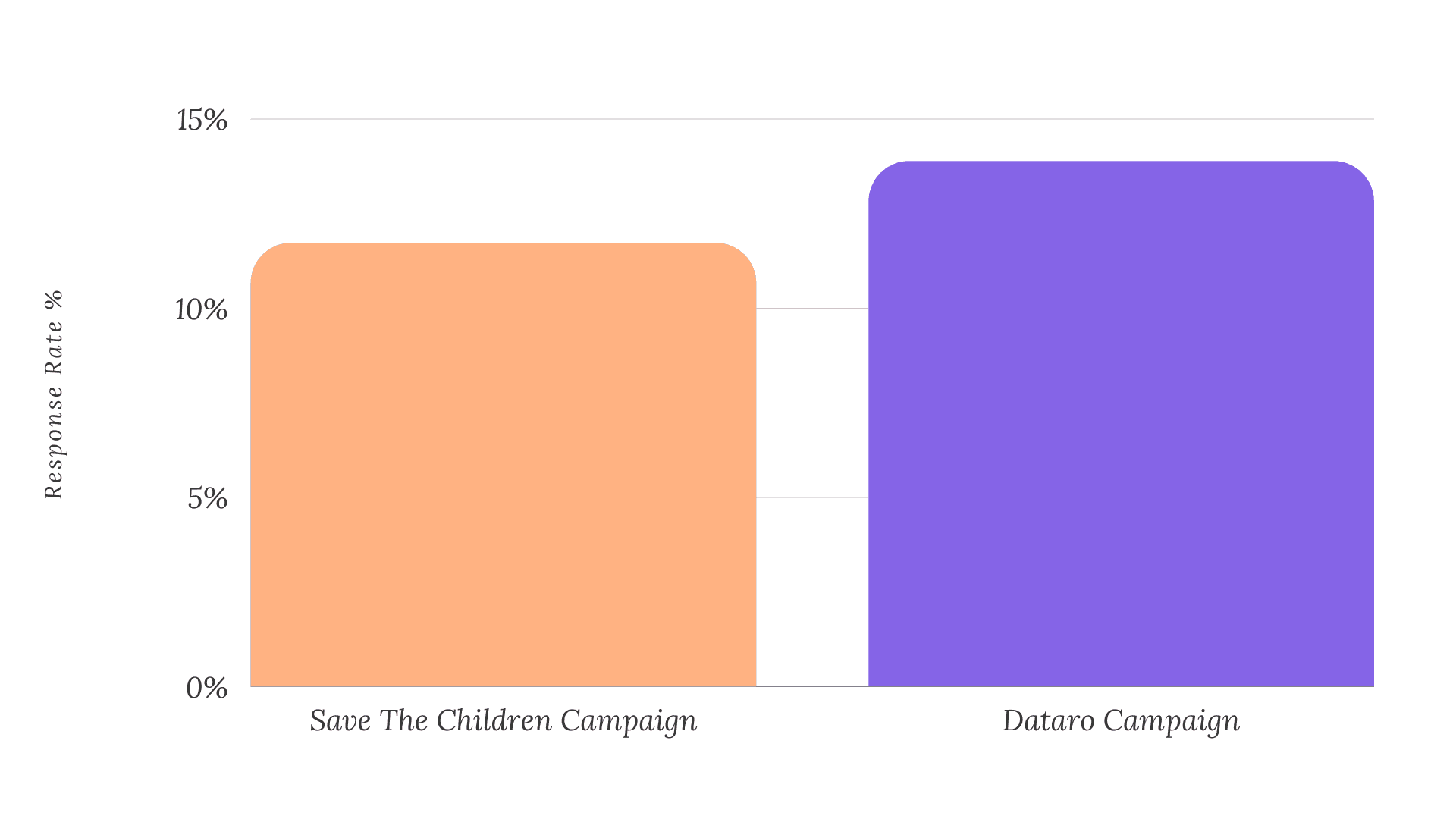
AI predictions increase appeal response rate
After the pilot, prediction-based targeting became the default for subsequent appeals
Following the Christmas appeal, Save The Children Australia ran two more appeals using ranked scores as the default selection method.
The team moved from debating list cut-offs to running a repeatable, measurable decision process.
Raise more per appeal by mailing the right donors
Learn how prediction scores help you set defensible cut-offs, cut waste and mail the right donors for your next appeal.
About the charity
Organisation Type
Health & Human Services
Region
Australia
Read our latest articles
Insights, case studies, and practical guides for not-for-profit fundraising teams.