Incrementality in fundraising: what it is and how to use it
Research & Data

Incrementality measures the extra donations an action causes, so you can fund what works and stop paying for gifts you'd have received anyway.
What is incrementality in fundraising?
Incrementality is the extra fundraising result caused by an action that would not have happened without it. It answers a simple question: did this appeal, call or reminder actually cause the gift, or would the donor have given anyway?
Most fundraising reports show what happened after a touch. Incrementality shows what changed because of it. That gap matters, because a lot of revenue credited to a campaign was already coming your way.
Definition: Incremental revenue is the difference between what a treated group of donors gave and what a comparable untreated group gave over the same period.
Why does incrementality matter for non-profits?
Budgets are tight and every mail piece, ad and staff hour is under scrutiny. If you can't tell which touches caused gifts, you tend to do one of two things: over-mail to feel safe, or cut spend and hope results hold.
Incrementality replaces that guesswork with evidence. It tells you where your effort is adding revenue and where you're paying to reach people who would have given regardless.
The payoff is concrete:
Spend where it creates lift, not where it looks good in a report
Mail fewer people with confidence and protect net revenue
Give leadership a clear, explainable reason for each cut or investment
Incrementality vs attribution: what's the difference?
Attribution assigns credit for a gift to a touch that came before it. Incrementality asks whether that touch changed the outcome at all. They often disagree.
Attribution | Incrementality | |
|---|---|---|
Question it answers | Which touch preceded the gift? | Which touch caused the gift? |
Method | Rules or models applied to past data | Test group vs control group |
Risk | Credits gifts that would have happened anyway | Needs a clean control group to work |
Best for | Reporting on activity | Deciding where to spend |
Typical blind spot | Overvalues cheap, late touches | Requires discipline to hold out a control |
Attribution is fine for describing what happened. When you're deciding what to fund next, incrementality is the stronger signal.
How do you measure incrementality?
The core method is a holdout test. You split a comparable group of donors, treat one part and hold the other back, then compare results.
Pick the action to test, such as a mail appeal, a phone call or an extra reminder
Choose a comparable audience and randomly assign a control group that won't receive the touch
Run the campaign to the treatment group only
Measure gifts, revenue and response for both groups over the same window
Subtract the control result from the treatment result to get the incremental lift
Keep the control group large enough to trust the difference, and hold it out honestly. A control group that quietly gets other touches will muddy the result.
Examples of incrementality in fundraising
Appeals: is the extra mail drop worth it?
You plan to mail 40,000 donors. Hold back a random 10% as a control and mail the rest. If the mailed group gives no more than the holdout, the drop isn't creating lift and you can cut volume without losing revenue. Often the top of the file drives the lift while the bottom breaks even or loses money.
Retention: does the reminder save the donor?
Test a lapse-prevention email or call on donors flagged at risk. Hold out a control of similar at-risk donors. The incremental result is the difference in renewals between the two groups. That tells you the true value of the intervention, not just how many treated donors happened to renew.
Mid-value and upgrades: does the ask move the gift?
Before rolling out a weekly upgrade ask, test it against a control that gets your standard ask. Compare average gift and total revenue. If the new ask lifts revenue for the treatment group, scale it. If not, you've saved a costly mistake.
Digital ads: are you paying for gifts you'd have received anyway?
Run ads to one audience and hold a matched audience back. Compare donations across both. Branded search and retargeting often show low incrementality because those donors were already on their way to giving.
How to start using incrementality this quarter
You don't need a data science team to begin. Start small and build the habit.
Pick one recurring campaign and add a randomised holdout of 5% to 10%
Define success before you start: incremental revenue per donor or incremental renewals
Measure both groups over the same window and report the difference, not just the total
Feed the result into the next plan, then repeat so each cycle gets sharper
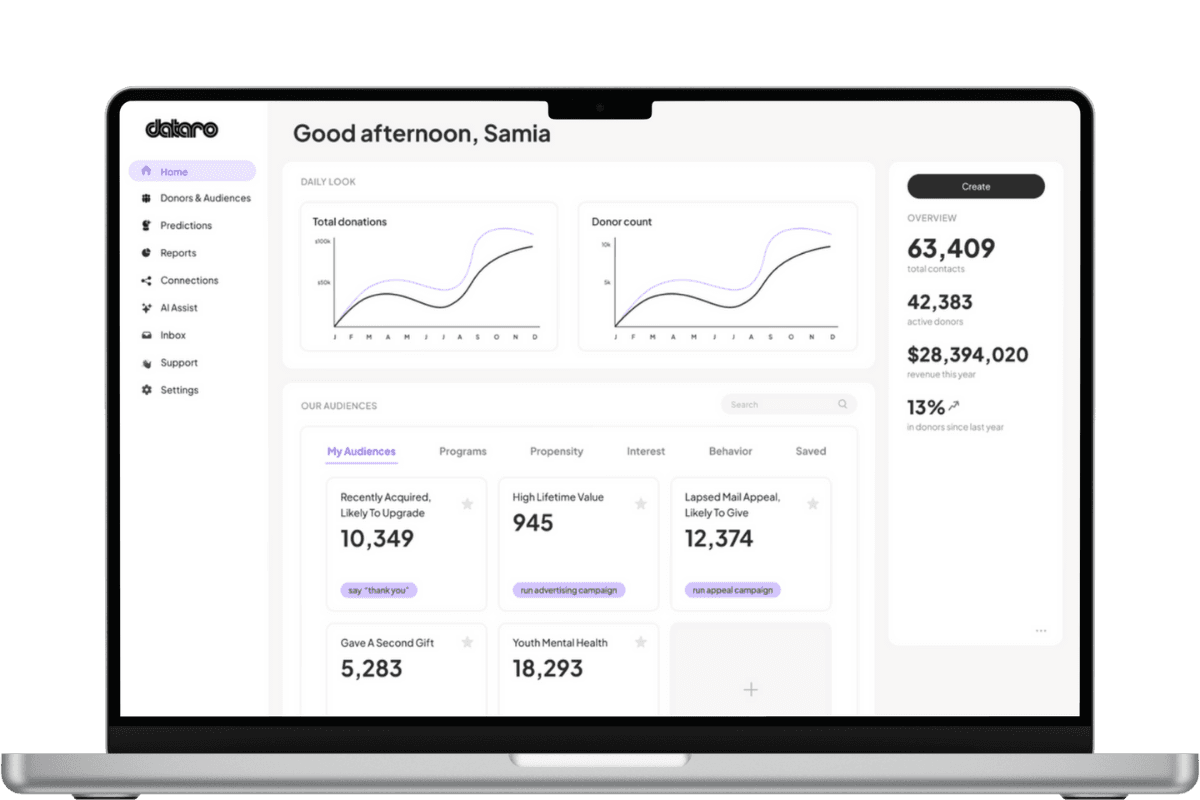
This fits a simple loop: predict who to focus on, act on the highest-value touches, measure the lift, then repeat. Tools like Dataro sit on top of your CRM to rank who to contact and help you test whether those touches actually pay off.

Practical takeaways
Incrementality measures caused gifts, not correlated ones
A randomised holdout is the cleanest way to prove lift
Attribution describes activity; incrementality guides spend
Test appeals, retention, upgrades and ads the same way
Use results to mail fewer people with confidence and protect net revenue
Conclusion
Incrementality turns a vague sense that a campaign "worked" into a number you can defend. By holding out a control group and measuring the difference, you learn which touches earn their cost and which ones you can cut. Start with one campaign, keep the holdout honest and let each test sharpen the next decision.
Related articles
Discover more insights into nonprofit fundraising and data from the Dataro team.