Why CRM integration complexity stalls fundraising decisions

Nic Miller
General

Fragmented, non-standard CRM stacks are now a leading blocker to adopting decision tools, and planning for interoperability early is the fix.
Integration complexity is now a real blocker
In recent conversations with buyers, one theme keeps surfacing: getting systems to talk to each other is harder than it should be. Teams running non-standard CRM stacks face custom integration work before they can act on their data.
The patterns repeat. One organization we work with splits donor data across two separate platforms. A customer wrestles with permissions in its marketing cloud. Another runs on thin, aging infrastructure. In each case, the obstacle isn't the value of better decisions. It's the plumbing required to reach them.
This matters because integration risk shapes buying decisions. Buyers weigh price and integration risk early, while teams already using these tools tend to focus on data quality and measurement. Naming the integration challenge upfront removes friction for both groups.
Why fragmented stacks slow everything down
Most nonprofits run separate systems for donor management, finance and event tracking. That fragmentation slows decision-making and increases errors, because data has to be reconciled by hand before anyone can trust it.
Different systems also follow different export and formatting customs. Pulling data together manually opens the door to mistakes, and those mistakes can damage donor relationships. The cost isn't just time. It's eroded confidence in the numbers.
The problem is intensifying. Nearly 57% of organizations plan to add or change at least one platform within 12 months, up from 42% in 2025. Every new tool is another connection to build and maintain.
Interoperability beats tool count
Modern buyers increasingly value strategic interoperability over the sheer number of tools they own. McKinsey's Technology Trends 2025 names interoperability as a top driver of software adoption. Products that can't exchange data with existing workflows risk being left out of the stack.
Non-standard stacks make this harder. Newer platforms often have thinner integration ecosystems than established systems, a genuine constraint for teams running unusual setups. Point tools stacked without integration management create silos rather than removing them.
There's a trust cost too. Some teams have switched CRMs because their integrations fell short, yet satisfaction with integration options stays low. Brittle connections that break when a vendor pushes an update only deepen the doubt.
How Dataro fits on top of your CRM
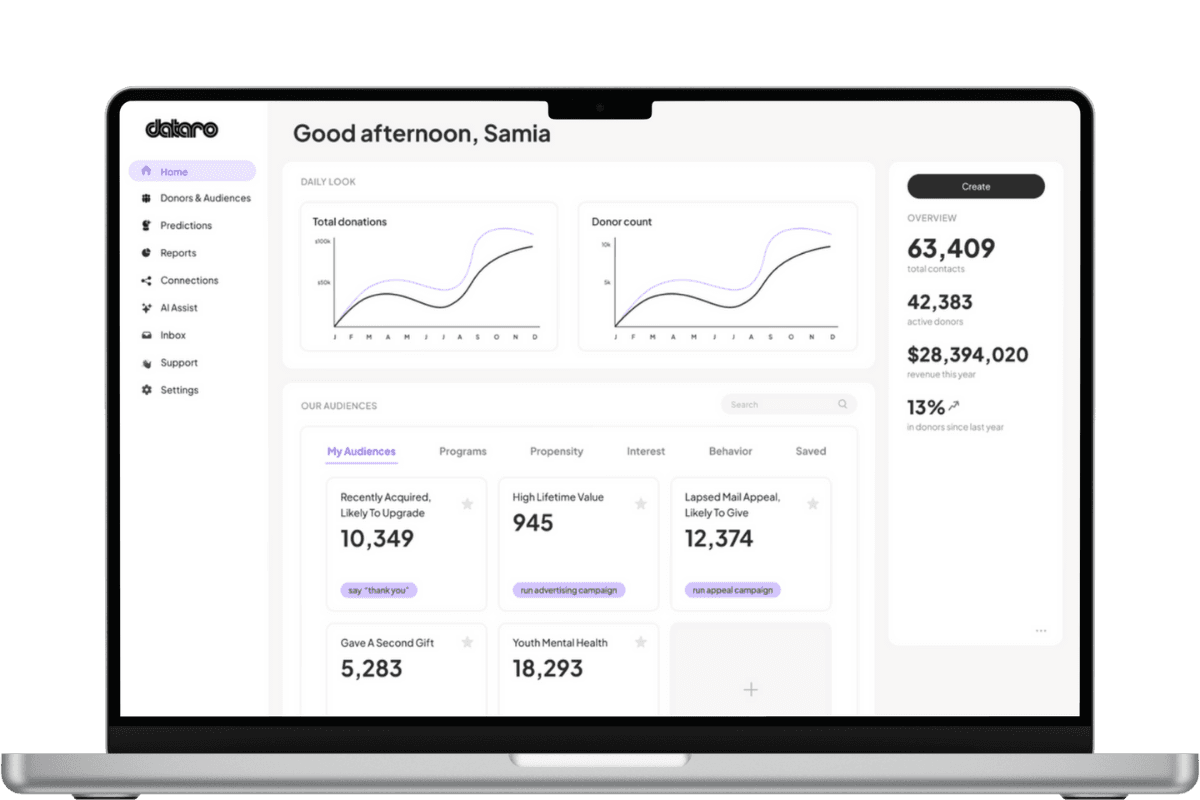
Dataro sits on top of your CRM and turns fundraising data into clear, ranked actions. The model is simple: data flows from your CRM into the decision layer, then back to your CRM as audiences, tasks, tags or lists your team can act on.
That framing keeps the lift low. You don't replace your system of record. You add a layer that helps you decide who to focus on, who to engage now and what to do next.
When integration questions come up, we meet them early. The goal is to agree on the decision you need and the minimum inputs to support it, even when the underlying stack is messy or non-standard.
Practical takeaways
Surface integration risk early in any evaluation. It shapes decisions whether or not it's discussed.
Audit how many systems hold your donor data and where manual reconciliation happens. Those handoffs are where errors and delays accumulate.
Prioritize interoperability over tool count. A connected stack you can act on beats a longer list of disconnected platforms.
Confirm how a tool handles non-standard setups and vendor updates before you commit, so connections don't break later.
Conclusion
Integration complexity has moved from a technical footnote to a leading adoption blocker, and platform churn is making it worse. Teams that plan for interoperability, name the risk early and keep the lift low will turn their data into decisions faster. The aim isn't more tools. It's a stack that helps you act with confidence.
Related articles
Find more nonprofit fundraising and data insights from the Dataro team.