Campaign ROI optimization: how smarter targeting lifts fundraising returns
General
The real problem with campaign ROI
Most fundraising teams don't have a measurement problem. They have a decision problem.
By the time a campaign wraps and the ROI report lands, the money is already spent. You can see what worked, but you can't change what you sent. The numbers explain the past. They don't fix the next campaign.
The teams that improve ROI consistently aren't the ones with the prettiest dashboards. They're the ones making fewer, better choices before the spend goes out the door.
That starts with two decisions: who to focus on, and what to do next.
Why ROI slips before the campaign even runs
When costs rise and teams stay flat, the safe default kicks in. Mail more people. Reuse last year's segments. Add a few names to be sure.
It feels responsible. It rarely is.
Every extra name you contact has a cost: postage, print, paid media, staff time and donor goodwill. When targeting is loose, you pay all of those costs to reach people who were never going to convert and risk fatiguing the donors who would have given anyway.
This is where ROI quietly leaks:
Over-mailing to feel safe. Bigger lists lower confidence in the numbers, not the risk.
Stale segments. Rules that worked last year may not predict behavior now.
Indefensible cutoffs. If you can't explain why a name made the list, you can't defend the spend.
No plan after the send. Activity resets each campaign instead of compounding.
The pattern is consistent. Waste is built in at the targeting stage, long before anyone reads the ROI report.
Focus: deciding who deserves attention
The first decision is the one that most affects ROI: who should you prioritize before you spend?
Good targeting isn't about reaching everyone you can. It's about reaching the people most likely to respond, and confidently leaving out the rest.
That means setting a cutoff you can actually defend. Not a gut feel. Not "we always mail down to this level." A ranked view of your file that puts the highest-likelihood donors at the top, so the cutoff becomes a clear line rather than a debate.
A defensible Focus decision does three things:
Gives you a short, ranked list stakeholders can approve quickly
Protects budget by cutting low-probability contacts without guesswork
Reduces donor fatigue by mailing fewer people with higher confidence
The goal is precision, not volume. Doing fewer things with higher confidence beats expanding the list to calm your nerves. Precision is the strategy.
Act: deciding what to do next
Targeting answers who. It doesn't answer what.
The second decision is what action should follow for each person, across every program. A donor who's primed to upgrade needs a different move than one who's quietly drifting toward lapse. A first-time giver needs stewardship, not another acquisition appeal.
This is where most ROI strategies stop short. Appeals, retention, mid-value and stewardship often run in silos. A donor gets pulled into one campaign with no clear handoff to the next program, so the work resets every cycle instead of compounding.
Good looks like next-best actions assigned to an owner and a workflow:
Upgrade the donors showing the signals for it
Steward the ones who just gave
Suppress the people who shouldn't get this appeal
Hand off the at-risk donors to retention before they churn
When the action is clear and assigned, ROI improves on both sides of the equation. You spend less reaching the wrong people, and you earn more from the right ones by doing the right thing at the right time.
Protect value before it churns
ROI conversations usually focus on the next campaign's return. Retention is just as much a growth lever, and it's easier to act on than most teams assume.
A lapsed donor costs far more to win back than a current donor costs to keep. The trick is spotting risk early enough to do something simple about it.
If you can see who's likely to lapse before they do, you can fold a low-cost intervention into the program you're already running. A timely thank-you. A different ask. A pause instead of another push. Small, operational moves that protect revenue you'd otherwise have to spend to replace.
A simple operating loop for better ROI
Optimizing campaign ROI isn't a one-time project. It's a rhythm you can repeat.
The loop is straightforward: predict, act, measure, repeat.
Predict. Turn your data into a ranked list and a clear cutoff you can approve.
Act. Make the next-best action easy to execute in the tools you already use.
Measure. Track what changed against the decisions you made, not just the totals.
Repeat. Feed the results back in so the next cycle gets sharper.
Each pass tightens the next. The first campaign sets a defensible cutoff. The second refines it with real results. Over time, your targeting gets more precise and your ROI gets more predictable, because every decision is grounded in signals rather than last year's rules.
What changes when targeting improves
The payoff isn't more activity. It's fewer, better decisions.
When Focus and Act are clear, the day-to-day changes in concrete ways:
Fewer debates about who makes the list and why
Faster approvals, because the cutoff is defensible
Lower waste on low-probability contacts
Less donor fatigue from over-mailing
A plan the team can actually run, with owners and next steps
That's what campaign ROI optimization really looks like in practice. Not a better report after the fact, but better decisions before the spend.
Where to start
You don't need to overhaul your systems to improve ROI. You need to fix the decision that drives it.
Start with one upcoming campaign. Rank your file, set a cutoff you can defend, and assign a clear next-best action for the donors you keep. Run it, measure against the decisions you made, and refine.
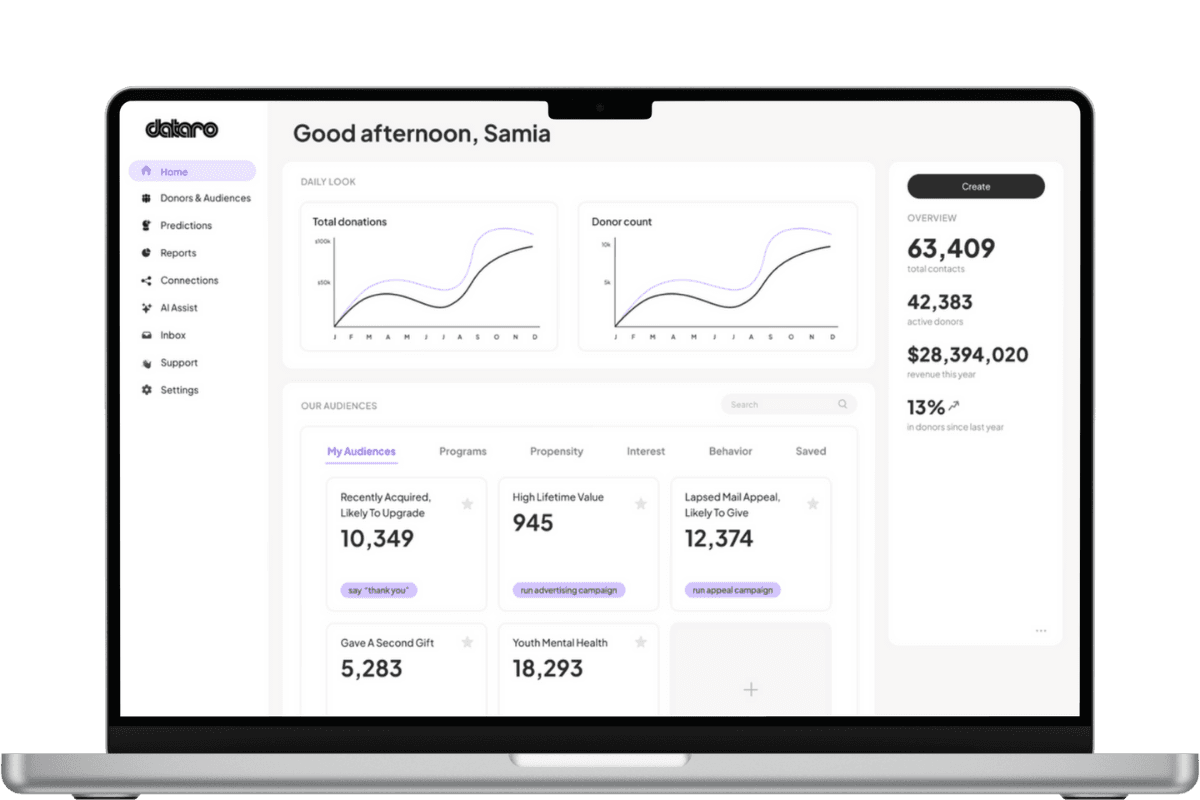
Dataro sits on top of your CRM and turns your data into clear, ranked actions, so you can decide who to focus on and what to do next. The systems stay the same. The decisions get sharper.
That's the difference between explaining last quarter's ROI and improving the next one.
Related articles
Find more nonprofit fundraising and data insights from the Dataro team.