Why a decision layer beats a CRM rip-and-replace

Nic Miller
Strategy & Frameworks

A decision layer on an existing CRM gives non-profits better fundraising results without the cost and risk of a full migration.
The case against rip-and-replace
Replacing a CRM is one of the riskiest projects a nonprofit can take on. The data is blunt. Gartner reports that 83% of data migration projects fail outright or run over budget and schedule, with poor data quality the leading cause. Harvard Business Review research puts the figure near 70%. Citing Forbes, one industry guide found only 36% of migrations succeed, meaning 64% miss their objectives or blow their budgets and timelines.
The pattern holds in the nonprofit sector. Studies from Gartner and Forrester estimate up to 50% of charity CRM migrations fail to meet expectations, often because teams overload the scope.
The hidden costs land after go-live
The sticker price of a migration is only part of the story. The expensive problems show up later.
Return on investment arrives slowly. G2 review data shows the average reported ROI for nonprofit CRM users was 16.95 months against an average contract of 11.5 months. More than a third of users waited 13 months or longer to see a return. For many teams, the payback lands after the contract is already up for renewal.
Cleanup is costly. Post-migration data cleanup reportedly runs 3 to 10 times the cost of cleaning the same records before the move.
Adoption is where switches quietly fail. A clean migration means little if the team can't use the new system. Most CRM switches stall on people, not technology.
What fundraisers actually want
In conversations with nonprofit teams, the request rarely starts with a new system of record. It starts with a decision. Who deserves attention this quarter? Who should we engage now? What is the next action for a donor at risk of lapsing?
Teams want clear, defensible answers they can explain to a board and act on next week. A migration asks them to absorb months of disruption before they get any of that.
A lower-risk path: the decision layer
There is a different option. Instead of replacing the CRM, you can add a decision layer on top of it.
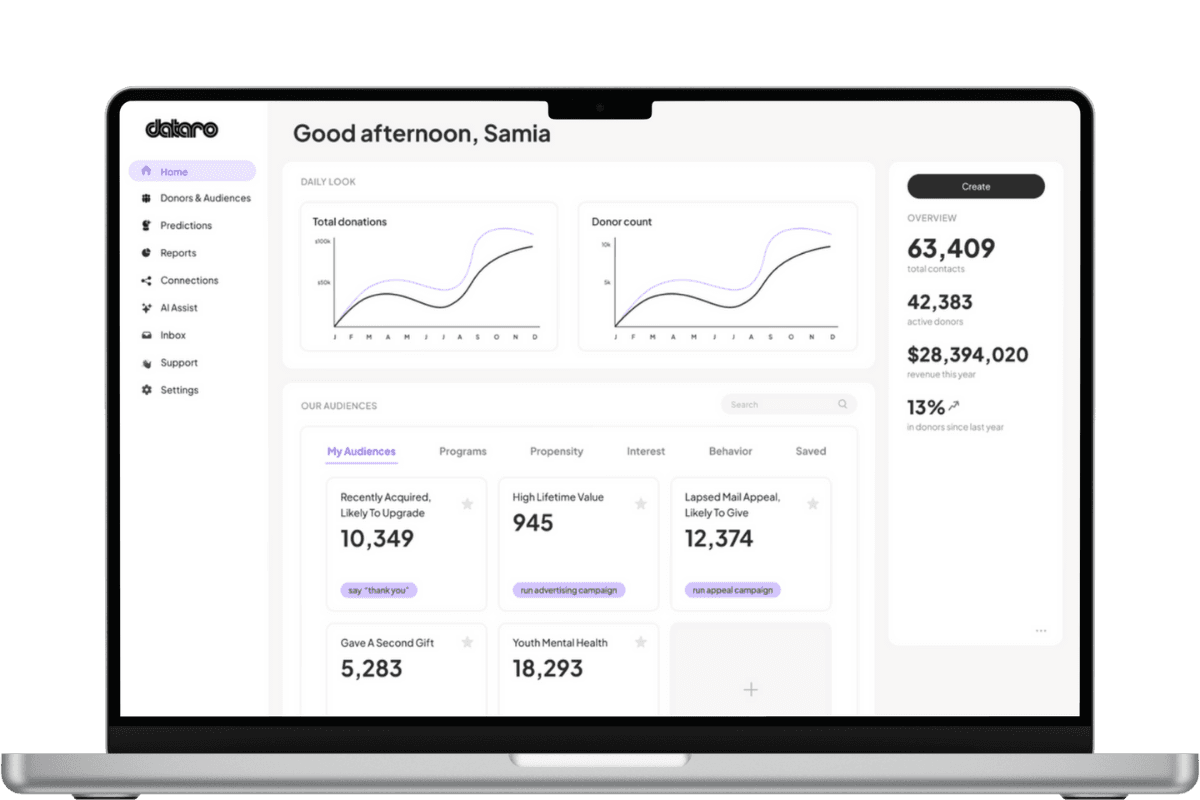
Dataro sits on top of your existing CRM and turns the data already in it into ranked priorities, defensible cutoffs and clear next actions. The work flows back into your CRM as audiences, tasks, lists or fields. The team keeps the system it knows and gains decisions it can use.
This avoids the failure modes that sink migrations. There is no rip-out, no long data transfer and no adoption cliff. Fundraisers get execution-ready outputs inside the workflow they already use.
Practical takeaways
Treat any CRM migration as a high-risk project and weigh it against the cost of staying put.
Account for the full cost: long ROI lag, post-move cleanup and the adoption risk that quietly sinks most switches.
Separate the question of "what system stores our data" from "what decisions do we need to make." You can often improve the second without touching the first.
Before committing to a replacement, test whether a decision layer on your current CRM gets you the outcomes you actually want.
Conclusion
The evidence is consistent. Migrations fail or overrun far more often than they succeed, and the costs keep building after go-live. For most fundraising teams, the goal was never a new database. It was better decisions. A decision layer on top of your existing CRM delivers those decisions without betting the year on a migration.
Related articles
Find more non-profit fundraising and data insights from the Dataro team.