American Academy of Paediatric Dentistry Foundation
How the American Academy of Pediatric Dentistry Foundation Broadened Donor Participation for End-of-Year Giving
The AAPD Foundation was over-reliant on a declining number of high-value donors, with limited data to tell them who was likely to give.
The AAPD Foundation shifted from a static ask structure, relying on a few high-capacity donors, direct mail-only asks, and primarily solicitation-focused communications, to a tailored ask structure, direct mail and digital communications, and sharing child patient stories that highlight donor impact.
The result: Broadening participation across all giving levels for year-end giving, simplifying the acknowledgement process, and increasing recurring giving revenue.
Rebuilding an annual fund as a team of one
The American Academy of Pediatric Dentistry Foundation (AAPD Foundation) supports community clinics that provide free or reduced-cost dental care to children across the United States.
When Celeste Stewart stepped into the annual fund coordinator role, the annual fund relied heavily on high-capacity donors, with no upgrade asks to offset a growing number of lapsed donors and falling participation over time.
Celeste’s mandate was simple: rebuild the annual fund into a consistent, scalable, and sustainable program. To do so, donor participation (the number of active donors across all gift sizes) needed to improve.
A program built on direct mail, manual processes, and campaign-centric outreach
The previous program relied heavily on direct mail. 90% of donor communication happened through mailed appeals and acknowledgements, without a consistent supporting communications calendar. Most outreach concentrated around two appeals:
The annual dues campaign
End-of-year giving
While fundraising efforts were year-round, the team didn’t have an official campaign from January to May. As a result, giving in the first half of the year was historically low compared to June-December. With most revenue collected during a compressed time window, confidence and predictability suffered. If one campaign underperformed, there was no fallback to offset that revenue loss.
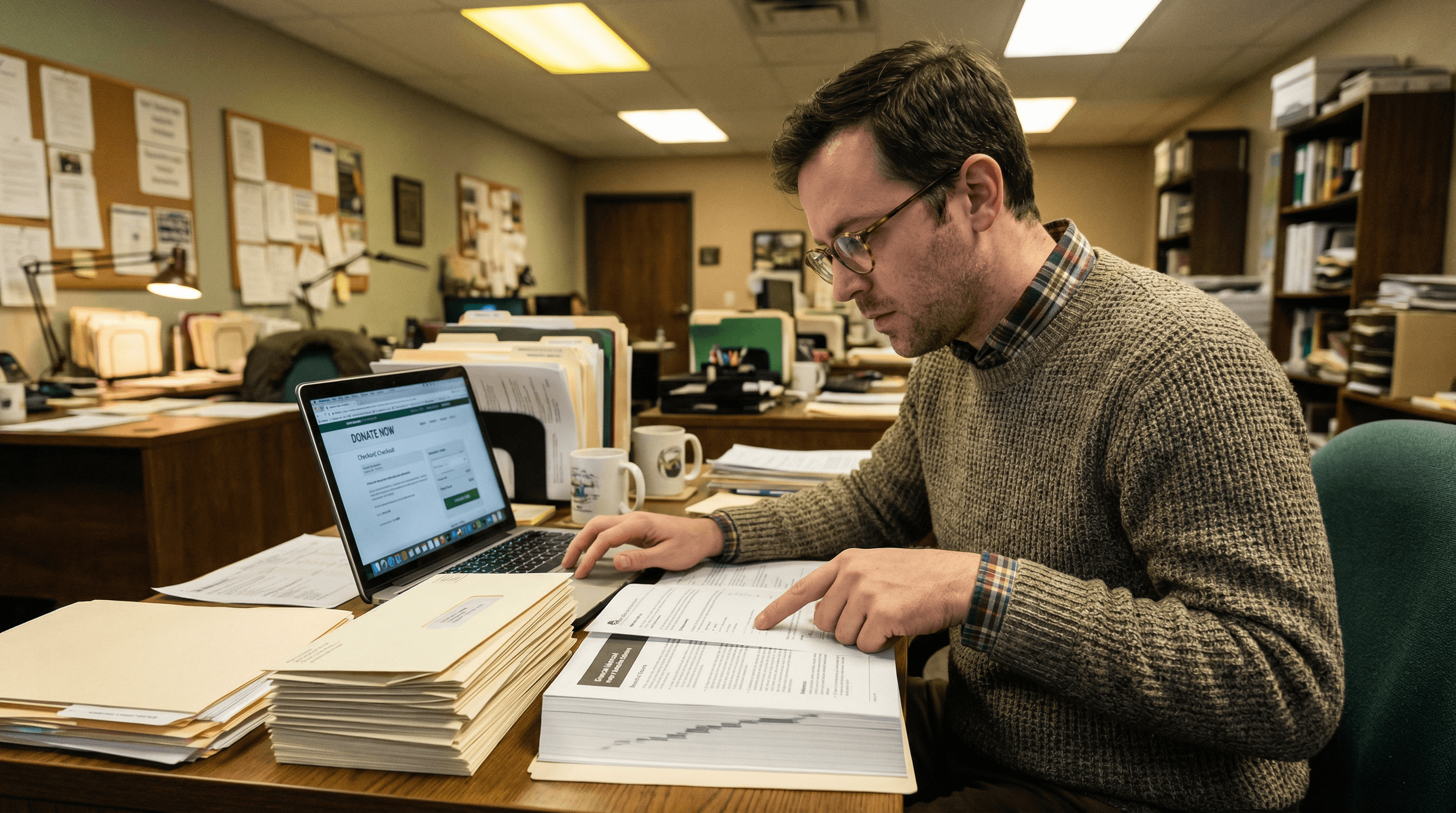
Manual processes left little time to strategise solutions. Acknowledgements required a disproportionate amount of staff time allocated to inefficient operations: each gift triggered a printed letter, folded, enveloped, and mailed by hand. The process took 8 to 10 hours a week and often delayed thank-you messages by weeks.
Years of repeating the same approach meant potential donors outside the active donor database were rarely engaged.
“We knew there were gaps, we just didn’t know where,” said Celeste.
Beyond channels: rethinking cadence and purpose of donor outreach
The turning point came from a simple question: what do donors actually want?
The AAPD Foundation development team ran a survey that revealed many supporters preferred email over direct mail. In parallel, internal analysis showed clear process gaps:
Limited audience engagement outside campaigns.
No structured way to reach non-donors.
Transactional communications that didn’t help build relationships.
The strategy shift Celeste’s team envisioned wasn’t just about where to reach prospective donors, but also how the Foundation approached engagement.
“We asked for money throughout the year, without communications focused only on relationship-building,” explained Celeste.
To combat donor fatigue and churn, the AAPD Foundation needed to:
Get lapsed donors back into regular giving.
Build a consistent, year-round communication rhythm.
Tailor outreach based on donor behaviour, not fixed asks.
Using automation to rebuild the program, not just maintain it
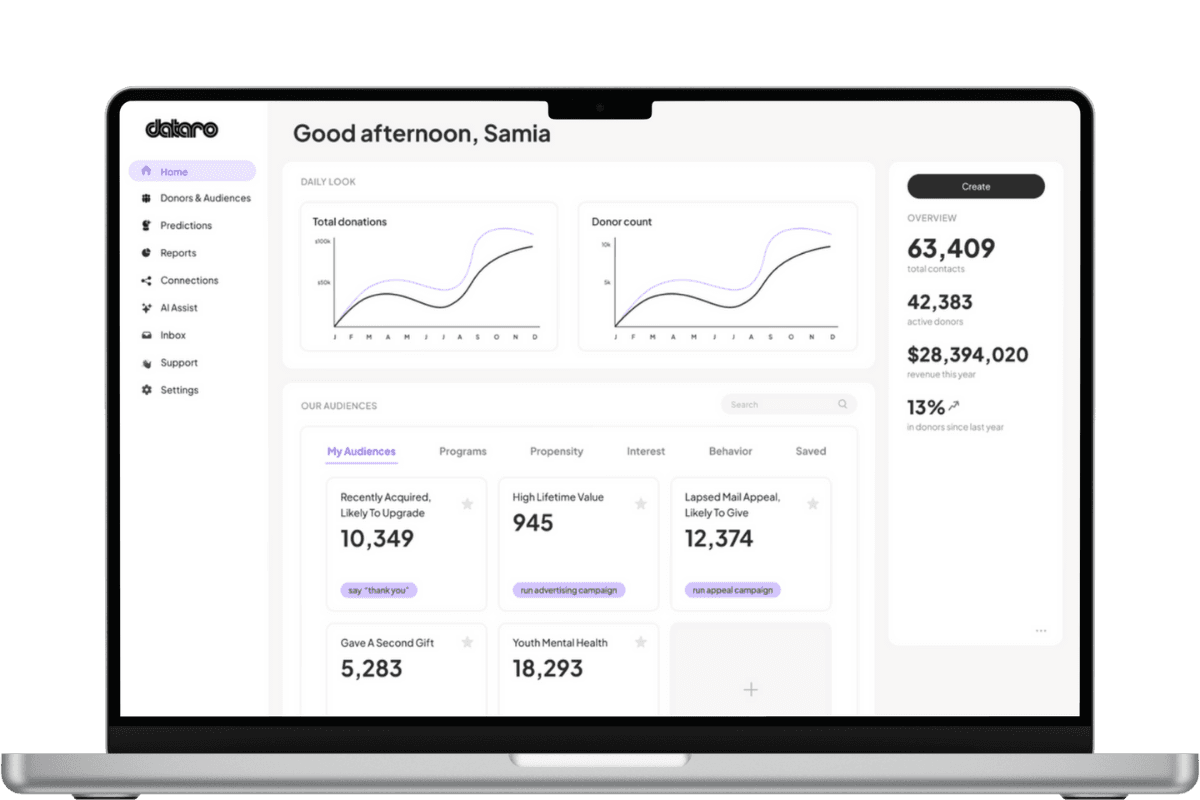
Celeste’s team started with the operational foundation. They used Dataro’s list builder to help segment the best candidates for asks. On top, they implemented Mailchimp and connected it to Raiser’s Edge through Omatic, allowing donor data to trigger automated communications.
First up: acknowledgements moved from manual mailings to a digital workflow, which significantly reduced turnaround time and administrative effort.
That change alone freed up 8 to 10 hours a week for Celeste’s team to focus on designing the program’s future.
Building an always-on program with ranked outreach
Before expanding the new digital communication channels, the team needed clearer input on the AAPD Foundation's data gaps: who to contact, who they were missing entirely, and how much each individual donor was likely to give.
Dataro helped us recognize what gaps we needed to fill to better communicate with our donors. It was kind of like having a fundraising consultant...because they know what our database looks like, they know our donor profile from our data…[it’s like] insider knowledge on how to be more effective.

Celeste Stewart
Annual Fund Coordinator @ AAPD Foundation
The predictive insights gave Celeste a clear answer to: who to engage now, without relying on guesswork.
Redesigning campaigns to reach more than major donors
In parallel, the team reworked the AAPD Foundation’s campaign structure. End-of-year giving, previously a single direct mail appeal, became a multi-touch campaign designed to engage a broader range of donors.
They introduced:
A weekly email cadence.
A clear campaign story from launch to close.
A dedicated landing page with an interactive map of funded clinics and real-time fundraising goal tracking.
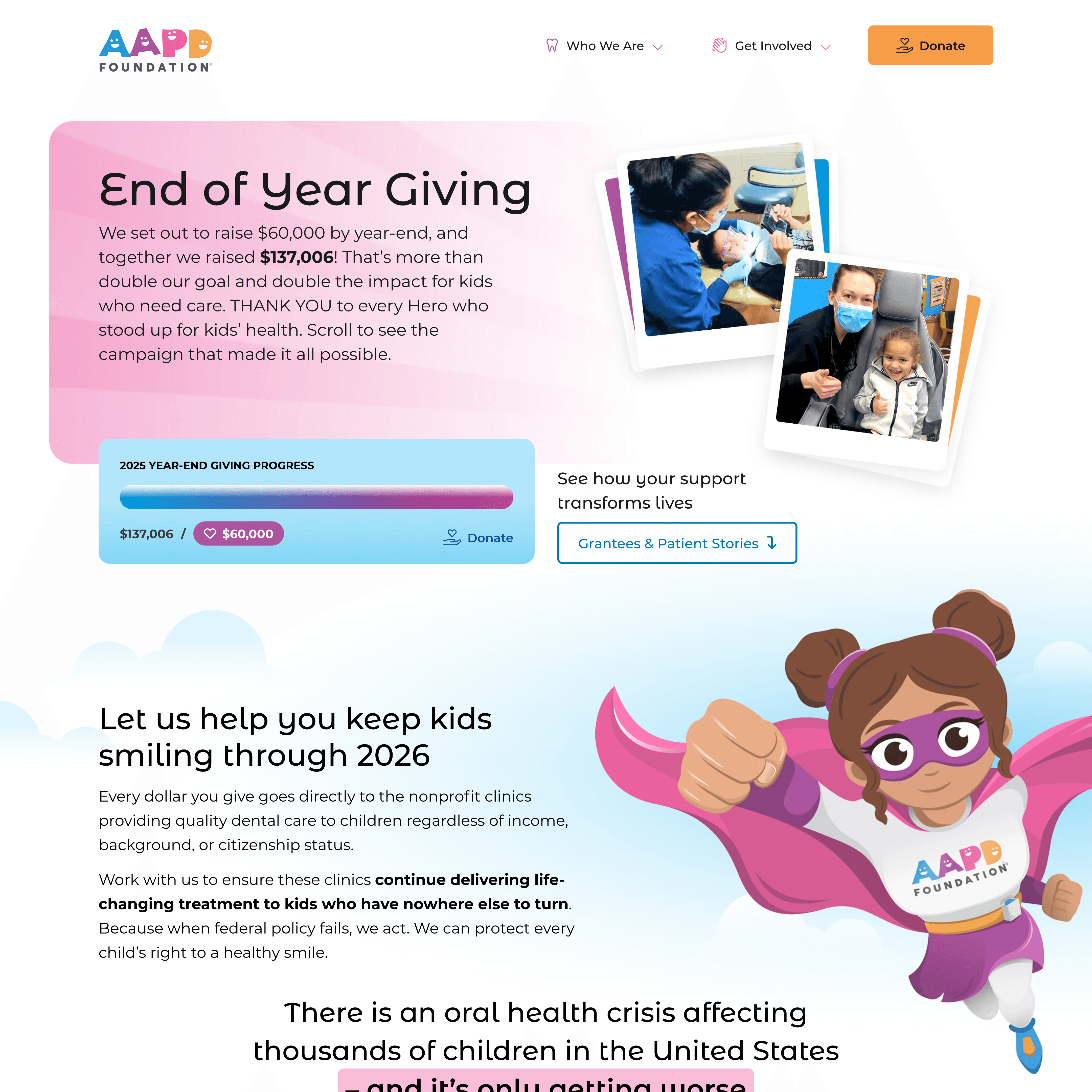
The team segmented messages by geo. Each message focused on a specific grant recipient and patient story from the donor’s region, so supporters could see how their gift helped children in their local community.
Participation, not just revenue, became the goal.
Moving from fixed asks to behaviour-based giving
It wasn’t just the impact stories that were customised to each donor. Dataro also enabled a broader view of ask amounts.
Previously, giving options were standardised at $100 and $300. This created an anchor that limited future contributions and didn’t reflect individual donor potential.
Using Dataro’s donor rankings as an intelligence layer, the team layered in more tailored asks:
Loyal donors were encouraged to increase their gift amounts.
Lapsed donors were invited back at familiar levels.
New donors were introduced at accessible entry points.
This created a more flexible structure that could grow with each donor over time.
Extending engagement beyond the campaign window
Finally, Celeste addressed what happened outside of appeals.
Instead of concentrating communication around fundraising windows, she introduced regular touchpoints:
Quarterly updates for recurring donors.
Birthday cards and personalised touches, including handwritten notes and welcome gifts sent to new Hero Squad recurring donors.
More impact storytelling across all communications.
It’s not just about asking. It’s about showing people what their support is actually doing.
Celeste Stewart
Annual Fund Coordinator @ AAPD Foundation
Building a more reliable annual fund
The new approach has created massive momentum in connecting annual fund donors to the Foundation’s mission.
During the 2025 end-of-year campaign, the team saw the highest levels of giving across all levels since FY23: 145 donors gave up to $2,000, a big increase from 71 the previous year.
Previous years had seen increasing average gift sizes from fewer donors: $695 in FY23, $1175 in FY24, and $1338 in FY25. In FY26, the average gift was $844 while revenue remained stable—indicating a healthy move away from overrelying on a small pool of donors.
“We’re building a healthier base,” Celeste said. “That’s what’s going to sustain us long term.”
By personalising asks and introducing regular touchpoints, the team shifted participation from a narrow group of high-value donors to a broader, more diverse base.
From rebuilding to scaling: planning for the future of the AAPD Foundation
With a sustainable base in place, the team is now focused on three areas:
Building a structured mid-level donor program to move new supporters beyond entry-level giving.
Developing a formal strategy for re-engaging lapsed donors.
Continuing to deepen relationship-based communication outside of appeals.
The goal is a more consistent, predictable annual fund.
“We’re on the right track. Now it’s about building on it,” said Celeste.
For teams starting from a similar place, Stewart’s advice is simple: start with the donor.
Don’t focus on revenue first. Focus on what your donors want, how they want to hear from you, and what matters to them.
Celeste Stewart
Annual Fund Coordinator @ AAPD Foundation
Because when engagement improves, the numbers follow.
Know who to reach before your next appeal
See which donors to prioritise so your next appeal reaches the right people with less guesswork.
About the charity
Organisation Type
Health & Human Services
Region
United States
CRM & Integrations
Blackbaud Raiser's Edge
Mailchimp
Omatic
Read our recent articles
Insights, case studies, and practical guides for not-for-profit fundraising teams.