What to measure after a fundraising campaign ends
Strategy & Frameworks

A tight, repeatable debrief turns campaign results into the next set of decisions, not another dashboard.
The short answer
Measure the few numbers that change what you do next. After a campaign ends, most teams either drown in an all-metrics dashboard or file a static report no one reopens. Neither answers the question that matters: what should we do differently next time?
A good debrief is a decision process, not a data dump. It moves from a clear question to a tight metric set, then to benchmarks, variance and next actions.
What is a post-campaign debrief?
A post-campaign debrief is a short, structured review that turns campaign results into a small set of decisions. It answers one question per campaign, uses a fixed metric set, compares results to your own history and ends with owned next actions.
It is not a performance dashboard and it is not a one-off slide deck. It is a repeatable rhythm your team runs after every campaign so learning compounds instead of resetting.
The framework: five steps
1. Define the question
Start with the decision the debrief should inform. A vague brief like "how did the appeal go?" produces a vague answer. A sharp question does the opposite.
Good debrief questions sound like this:
Should we keep the reduced mail volume or return to the larger file?
Did the new ask ladder lift average gift without cutting response?
Which lapsed segment is worth a second touch next quarter?
One campaign, one primary question. You can track secondary numbers, but the debrief exists to settle the primary one.
2. Pick a tight metric set
Choose four to six metrics that map directly to the question. More metrics feel thorough but slow the decision and invite selective reading.
For most appeals, a defensible core set is:
Response rate
Average gift
Net revenue
Cost to raise a dollar
Retention or reactivation rate for the targeted segment
If a metric would not change your decision, leave it out of the debrief. Park it in your reporting layer instead.
3. Compare to internal benchmarks
Judge results against your own recent campaigns, not against sector averages. Industry numbers vary too much by cause, file and channel to guide a specific decision.
Use the same segment, channel and season where possible. A year-end appeal should be measured against prior year-end appeals, not against a spring email push. Keep a simple running record so each debrief has a like-for-like baseline.
4. Explain the variance
A number that moved is not an insight. The insight is why it moved and whether the cause repeats.
For each metric that beat or missed the benchmark, name the most likely driver and how confident you are:
Was it the audience, the offer, the timing or the creative?
Was the change large enough to act on, or within normal noise?
Can you separate the campaign effect from outside factors like a news event?
Write the explanation in one or two sentences per metric. If you cannot explain a swing, say so and flag it for a test next time.
5. Decide the next actions
End every debrief with a short list of actions, each with an owner and a date. This is where most reviews fail: they describe the past and stop.
Strong next actions are specific and operational:
Keep the reduced file and apply the same cutoff to the next appeal.
Move the mid-value segment that upgraded into a stewardship track.
Suppress the two segments that returned negative net revenue.
Test a higher first ask on new donors in the next mailing.
Assign each action to a person and a workflow so the decision actually gets run.
How the debrief compares to the alternatives
Most teams default to one of two habits. Here is how a focused debrief stacks up.
Approach | Strength | Weakness | Best use |
|---|---|---|---|
Repeatable debrief | Answers one question, ends in owned actions | Requires discipline to keep the metric set tight | Deciding what to change before the next campaign |
All-metrics dashboard | Broad visibility, always on | No point of view; invites cherry-picking and analysis paralysis | Ongoing monitoring, not decisions |
One-off static report | Polished, good for the record | Rarely reopened; learning does not carry forward | Board updates and archives |
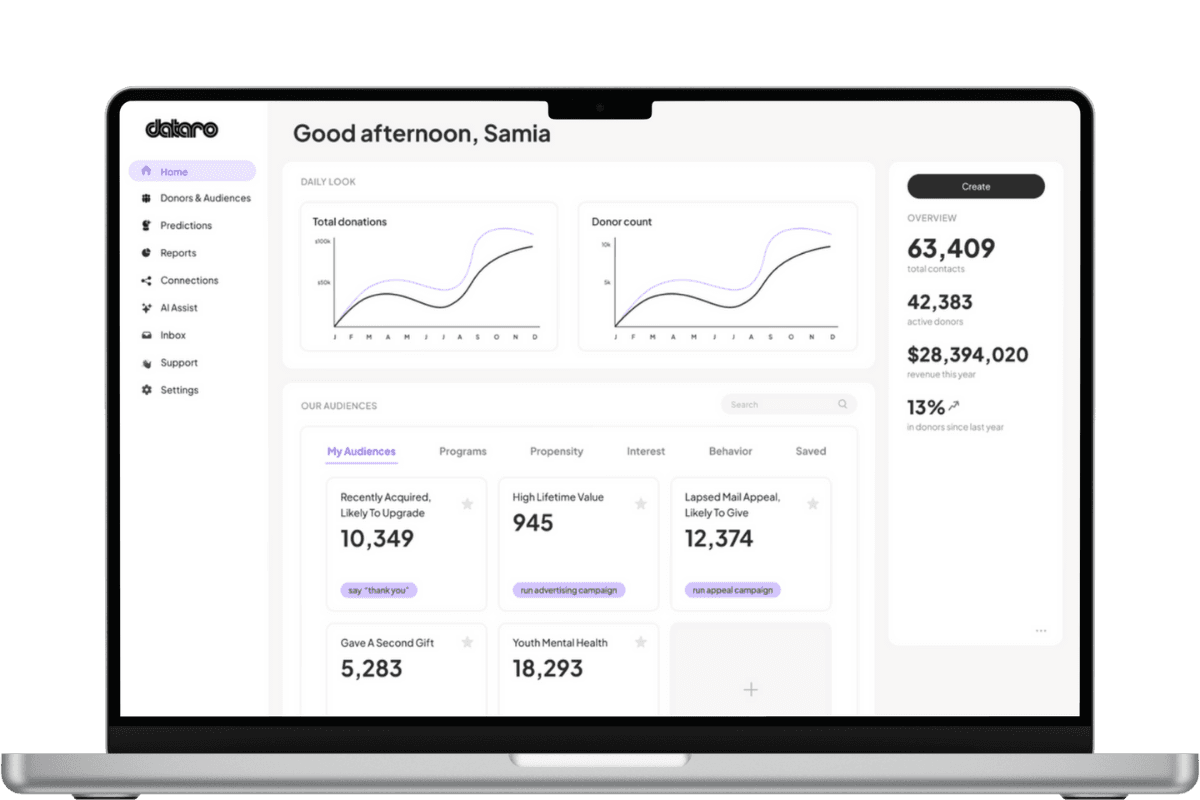
The dashboard and the report both have a place. The mistake is using them where a decision is needed. A dashboard tells you what happened. A debrief tells you what to do.
Practical takeaways
Write the primary question before you pull a single number.
Cap the metric set at four to six and park the rest.
Benchmark against your own comparable campaigns, not sector averages.
Explain every meaningful swing and rate your confidence in the cause.
Close with dated, owned next actions or the debrief was just a report.
Keep a running record so each cycle sharpens the next.
Conclusion
The question is not "what can we measure?" It is "what should we measure to decide what to do next?" A tight, repeatable debrief answers that in an hour and sends your team into the next campaign with fewer debates and clearer choices.
Dashboards watch. Reports record. The debrief decides. Run it after every campaign and your results start to compound instead of reset.
Want to turn campaign results into ranked next actions your team can run? See how Dataro sits on top of your CRM and closes the predict, act, measure, repeat loop.
Related articles
Find more not-for-profit fundraising and data insights from the Dataro team.